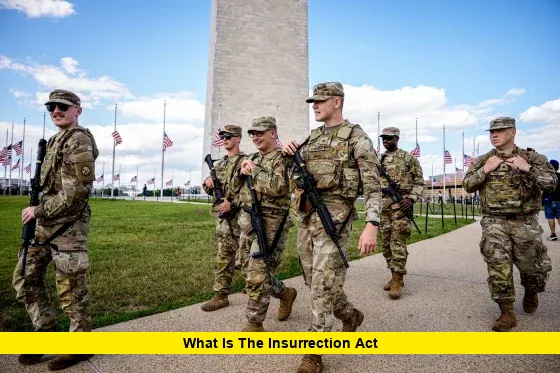
In today’s high-stakes political climate, what is the insurrection act and when was it last used has become a central question as federal and state tensions grow over unrest in Minnesota and the potential role of the U.S. military in domestic affairs. This law, more than two centuries old, grants the president exceptional authority to send federal troops onto American streets under narrow conditions. Recent developments have pushed this dormant legal power back into public debate, compelling citizens to understand its origins, mechanics, and historical use.
Origins of the Insurrection Act
The Insurrection Act dates back to the early days of the United States and was designed to give the federal government a way to respond when state or local authorities could not control disorder or enforce the law. It stands as a key exception to a longstanding principle that the U.S. military should not act as domestic law enforcement.
Under the Act, the president can deploy active-duty military or federalize National Guard units within the United States to restore order, suppress rebellion, or uphold federal law if circumstances on the ground overwhelm civilian authorities. These statutory provisions are now part of Title 10 of the U.S. Code, reflecting laws enacted between the late 1700s and late 1800s.
Why It Matters Right Now
In early 2026, unrest in Minneapolis and the surrounding area has drawn national attention after high-profile federal immigration enforcement operations led to clashes with local residents and protests. The shootings of civilians by federal agents have sparked demonstrations, and the federal government has responded by sending thousands of immigration officers to the region and placing about 1,500 active-duty soldiers from an Alaska-based Army unit on prepare-to-deploy orders. These steps have been interpreted by many as part of broader federal efforts to assert control over local public order.
President Donald Trump has publicly threatened to invoke the Insurrection Act to deploy the military if state and local officials fail to contain what he calls violent unrest and protect federal personnel. Though the president later softened his stance and acknowledged that invoking the law is not necessary “right now,” the mere possibility of using this rarely relied-upon statute has reignited debate about the proper use of military force within the nation.
Minnesota political leaders, including the governor and the mayor of Minneapolis, have opposed this idea, urging de-escalation and greater cooperation between federal and state authorities. Their concern is that introducing active-duty troops into tense protest environments could further inflame tensions rather than calm them.
How the Act Works in Practice
Under normal law, the Posse Comitatus Act prohibits federal military forces from engaging in domestic law enforcement. The Insurrection Act temporarily waives that restriction, allowing the president to use federal troops to enforce the law, protect constitutional rights, or suppress rebellion if civil law enforcement is unable or unwilling to manage the situation.
There are several scenarios in which the president can invoke the Act:
- A state governor or legislature requests federal assistance when local resources are insufficient to control disorder.
- Federal law cannot be enforced by ordinary means because of obstruction or resistance.
- Citizens are being deprived of constitutional rights and state authorities are failing to protect those rights.
Even when invoked, the president’s use of military forces is meant to support law enforcement, not to replace civilian governance or suspend constitutional rights. Troops must still operate within legal limits and respect civil liberties.
Historical Use: Rare and Restrained
The Insurrection Act has been invoked only a few dozen times in U.S. history, largely in moments of acute crisis.
Presidents have used it to respond to early rebellions, federal challenges to state resistance during Reconstruction, and major civil unrest. In the 20th century, federal troops were deployed under the Act to enforce school desegregation and to quell large urban riots.
The most recent confirmed invocation occurred in 1992, when the governor of California requested federal military assistance to help suppress widespread violence and looting in Los Angeles following a jury’s decision in a high-profile police brutality case. That deployment of federal troops marked the last time the Insurrection Act was formally used to restore order during domestic unrest.
Since then, the law has lain largely dormant. Despite significant protests and periods of civil unrest in the decades that followed, presidents have rarely turned to this tool, preferring other legal authorities or cooperation with state and local officials.
How It Differs From Martial Law
It is important to distinguish the Insurrection Act from martial law. Invoking the Insurrection Act does not suspend constitutional rights or transfer governing authority to the military. Civilian courts, legislatures, and law enforcement remain fully operational, and military personnel act in support of those institutions.
Martial law, by contrast, involves replacing civil authority with military rule, a step far beyond what the Insurrection Act authorizes. The Act allows troops to aid in enforcing law and order while respecting existing civil structures and legal protections.
Controversy and Constitutional Concerns
Because the Insurrection Act grants the president broad discretion to deploy military forces within the United States, its use is often contentious. Critics argue that invoking the law without a clear, objective emergency—such as a complete breakdown of civilian law enforcement or the suspension of constitutional protections—risks politicizing the military and undermining democratic norms.
Civil liberties advocates also warn that military deployment can chill free speech, discourage lawful protest, and create an environment where the armed forces are perceived as a domestic policing force rather than a defense institution.
Supporters of the Act contend that it remains a necessary option when civilian authorities are overwhelmed or unable to uphold the law. They emphasize that the president must, by law, first issue a proclamation ordering those causing unrest to disperse, and that federal military forces should only be used when absolutely necessary.
Even with these legal guardrails, the Act’s potential use inevitably raises questions about federal–state power dynamics, the separation of powers, and the proper balance between security and civil liberties in times of crisis.
The Debate Over Current Use
In the current situation in Minnesota, federal officials have signaled readiness to deploy troops if ordered, but no formal invocation of the Insurrection Act has taken place. The presence of federal immigration agents and protests has been cited by the administration as justification for heightened federal involvement, though state leaders maintain that local resources and law enforcement are capable of maintaining public order without military intervention.
Courts have also weighed in on related legal questions, such as the limits of federal law enforcement actions in protest situations, adding another layer of complexity to the debate. Legal experts note that a formal invocation of the Insurrection Act is rare precisely because it is reserved for extraordinary circumstances.
If the president does invoke the Act, it would mark the first time in more than three decades that the law has been used, making it a significant moment in American governance. Whether that step ultimately occurs or not, the current discussions illustrate how powerful and controversial this legal authority remains.
What to Watch Next
The coming weeks and months may be pivotal in determining whether the Insurrection Act is activated for the first time in decades, or whether federal and state leaders find alternative ways to address unrest without involving active-duty military forces.
Key factors to follow include:
- Statements from the White House regarding any formal invocation.
- Responses from state and local officials about requests for federal assistance.
- Independent legal assessments of whether the conditions for invoking the law are truly met.
As events unfold, the nation will be watching closely to see how this seldom-used statute is interpreted and whether its use sets a new precedent for domestic military authority.