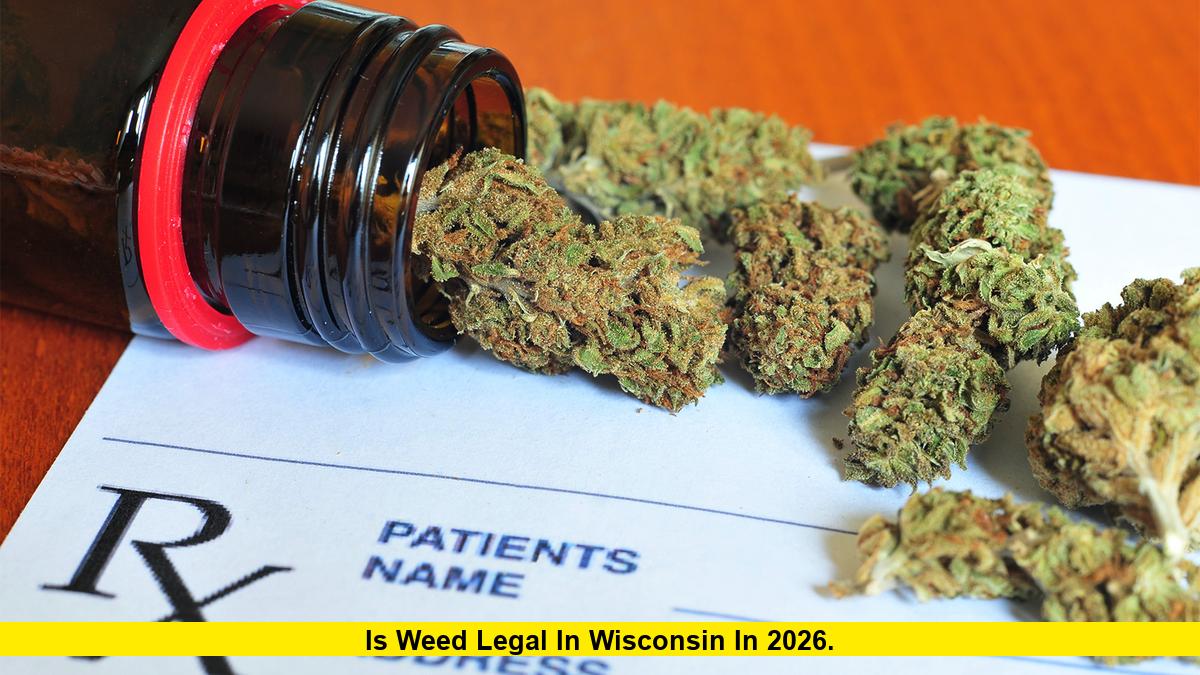
Many people continue asking one key question: is weed legal in Wisconsin today? In 2026, recreational marijuana remains illegal under state law, placing Wisconsin among a shrinking group of states that have not adopted adult-use legalization. While policy discussions are active and new proposals are moving through the legislature, possession, sale, and cultivation of marijuana are still prohibited statewide.
At the same time, the issue is far from settled. Legislative debates, regional pressure from neighboring states, and the rapid expansion of hemp-derived THC products are reshaping how cannabis is discussed across Wisconsin.
Wisconsin’s Marijuana Law Right Now
Under Wisconsin law, marijuana containing more than 0.3% delta-9 THC is illegal. This applies to recreational use as well as most medical use.
Possessing cannabis can lead to fines, potential jail time, and more serious consequences for repeat offenses. Distribution, growing marijuana plants, and selling cannabis remain criminal offenses.
Despite changing attitudes nationally, Wisconsin has not adopted a statewide system allowing adults to purchase cannabis legally. This distinguishes the state from much of the country, where legalization has expanded rapidly.
Penalties and Enforcement Differences
State law sets the legal framework, but enforcement can look different depending on location.
In some Wisconsin communities, local ordinances reduce penalties for small amounts of marijuana. Instead of criminal charges, individuals may receive civil citations and fines.
However, these local approaches do not change state law. Marijuana remains illegal, and individuals can still face criminal consequences depending on circumstances and prior history.
This variation has created confusion for residents who assume reduced penalties mean legalization, which is not the case.
Medical Cannabis Policy Remains Limited
Wisconsin does not operate a comprehensive medical marijuana program like most states.
The state allows certain CBD products with minimal psychoactive THC for specific medical conditions. This narrow approach does not provide broad patient access to traditional medical cannabis products such as flower, vapes, or higher-THC formulations.
In 2026, lawmakers continue to debate proposals that would establish a structured medical cannabis system. Some proposals focus on tightly controlled distribution and restrict qualifying conditions.
These discussions signal momentum, but no statewide medical program has been implemented.
Legislative Activity Driving the Debate
Cannabis policy remains one of the most discussed topics in the Wisconsin legislature this year.
Recent legislative activity includes:
- Senate movement on a medical marijuana proposal
- Ongoing proposals supporting adult-use legalization
- Discussions about decriminalization of small amounts
- Policy conversations around taxation and regulation
Some lawmakers advocate a cautious medical-only framework, while others support broader legalization that mirrors neighboring states.
For now, none of these proposals have resulted in statewide legalization.
Hemp Products Reshaping the Market
While marijuana remains illegal, hemp-derived cannabinoids have created a fast-growing legal marketplace.
Retail stores across Wisconsin sell products derived from hemp that comply with federal THC limits. These products often include:
- Delta-8 THC items
- THC-A products
- Hemp-derived edibles
- Vape cartridges made from hemp cannabinoids
Because these products fall under hemp regulations, businesses can sell them even though traditional marijuana is prohibited.
The expansion of this market has intensified regulatory discussions, as policymakers evaluate safety standards, labeling requirements, and consumer protections.
Regional Differences Increasing Pressure
Wisconsin’s position is increasingly notable because nearby states have legalized recreational cannabis.
Residents can legally purchase marijuana in neighboring states where adult-use sales are permitted. Crossing state lines with cannabis, however, remains illegal under Wisconsin law.
This regional contrast has sparked policy debates focused on:
- Tax revenue leaving the state
- Economic development opportunities
- Competitive disadvantages for Wisconsin businesses
- Enforcement challenges tied to cross-border travel
Lawmakers frequently reference these issues when discussing future policy changes.
Why Legalization Has Been Slower
Several structural and political factors explain the slower pace of cannabis reform.
Legislative control
State law requires legalization to pass through the legislature rather than through a voter-initiated ballot process. Wisconsin does not allow statewide citizen initiatives that directly legalize marijuana.
Policy disagreements
There is ongoing debate over how cannabis should be regulated, including whether sales should be privately operated, state-run, or tightly restricted.
Public health and safety concerns
Some policymakers emphasize caution, prioritizing research, youth prevention, and regulatory frameworks before expanding access.
These factors contribute to gradual policy movement rather than rapid change.
Public Opinion Continues to Shift
Surveys and political messaging indicate growing support for cannabis reform among Wisconsin residents.
Support spans several areas:
- Medical marijuana access
- Decriminalization of small amounts
- Regulated adult-use legalization
- Tax revenue investment
As public opinion evolves, the issue has become a recurring topic during election cycles and legislative sessions.
Even so, public support alone does not automatically change state law without legislative agreement.
Economic Arguments in the Policy Conversation
Economic impact is one of the most prominent themes in cannabis discussions.
Supporters highlight potential benefits such as:
- Job creation across retail, agriculture, and manufacturing
- New tax revenue streams
- Reduced enforcement costs
- Opportunities for small businesses
Opponents often raise concerns about regulatory complexity, market oversight, and the need for careful rollout strategies.
These competing perspectives shape the pace and direction of reform.
Federal Policy Changes and State Impact
At the national level, cannabis policy continues to evolve. Federal officials have taken steps that could shift how marijuana is classified, potentially affecting research, banking, and industry operations.
However, federal changes do not automatically change Wisconsin law. States maintain authority over legalization decisions.
Still, federal policy developments can influence state lawmakers and industry planning.
The Role of Decriminalization Efforts
Decriminalization is frequently discussed as a possible intermediate step before full legalization.
Some proposals aim to reduce penalties for first-time possession statewide, aligning enforcement with local policies already adopted in certain cities.
Advocates argue that decriminalization can reduce criminal justice impacts while lawmakers continue broader legalization discussions.
Whether statewide decriminalization advances remains uncertain.
Business and Industry Watch Closely
Retailers, farmers, and entrepreneurs are paying close attention to cannabis policy developments.
Hemp businesses, in particular, face uncertainty because future regulations could change product availability, testing standards, and labeling requirements.
Companies considering entering the cannabis market are also watching legislative signals to determine whether Wisconsin may open a regulated industry in the coming years.
What Residents Should Know Now
For residents trying to understand current rules, the key takeaway is straightforward: recreational marijuana remains illegal across Wisconsin in 2026.
Medical access is extremely limited, enforcement can vary locally, and hemp-derived products exist in a separate regulatory category.
The policy conversation is ongoing, but no comprehensive legalization framework has been enacted.
Understanding these distinctions is important for anyone living in or traveling through the state.
Looking Ahead
Cannabis policy in Wisconsin is evolving, but change has been incremental rather than immediate.
Future developments could include:
- Passage of a medical marijuana program
- Broader decriminalization measures
- New regulatory rules for hemp-derived THC products
- Continued debate over adult-use legalization
The timeline for major reform remains uncertain, yet the issue continues to gain attention from lawmakers, businesses, and voters.
As discussions continue, the answer to is weed legal in Wisconsin remains unchanged: adult-use marijuana is illegal, medical access is limited, and policy decisions are still unfolding at the state level.